How Do I Convert Third-Party Delivery Customers Into Direct Guests I Actually Own?
Every delivery order that comes through a third-party platform is a customer you paid to acquire, but whose name, number, and habits belong to someone else. The conversion path is simpler than most operators think: capt
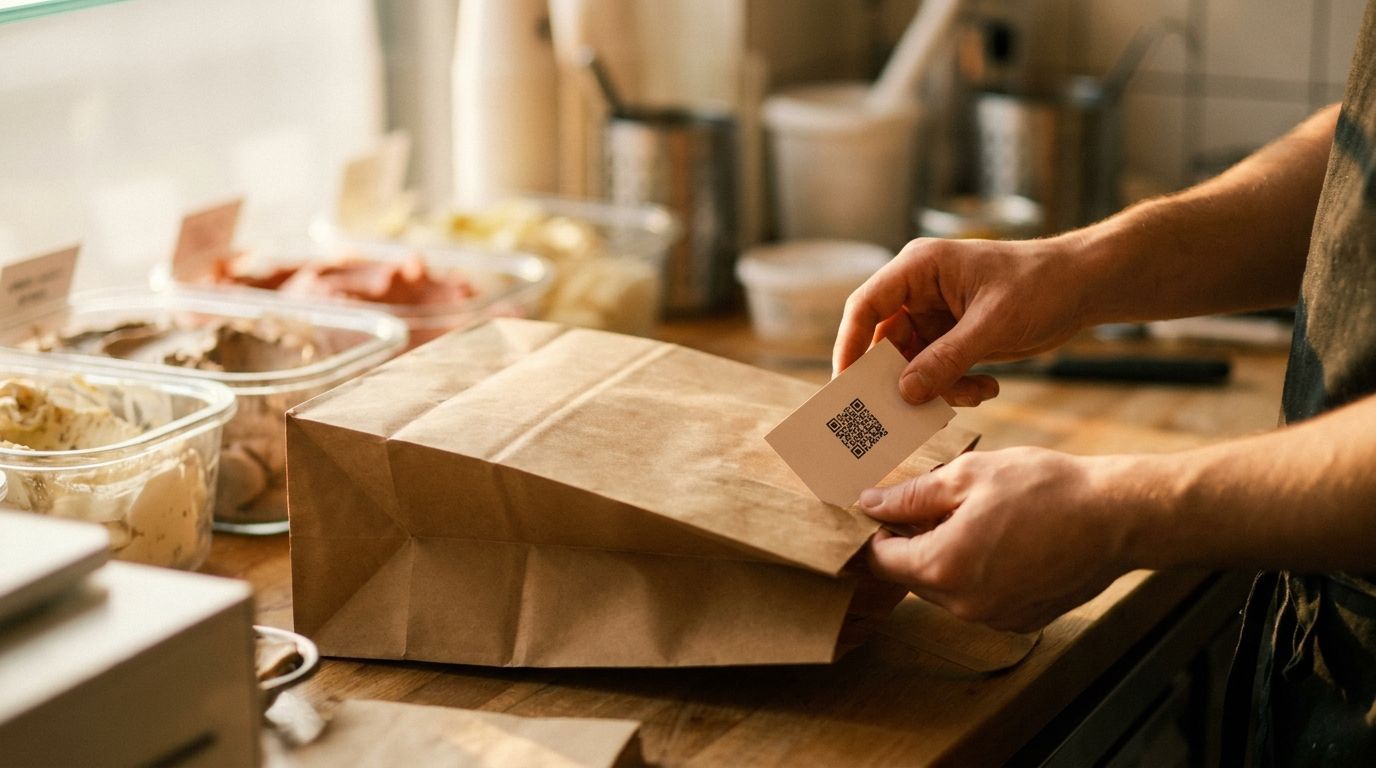
Every delivery order that comes through a third-party platform is a customer you paid to acquire, but whose name, number, and habits belong to someone else. The conversion path is simpler than most operators think: capture a feedback signal at the moment of delivery, offer a reason to come back directly, and move that guest into a channel you control before the next order goes back through the platform.
In brief: On the major platforms' published partner plans, marketplace commissions run from 15 to 30 percent per order depending on tier, and the platform keeps the customer data, meaning operators pay an acquisition fee every time the same guest reorders. The fix is a lightweight feedback-to-direct-channel bridge, typically a QR code or SMS prompt on the packaging, that captures the guest's contact information and moves them into a loyalty or messaging channel the operator owns. Once a guest is in a direct channel, the cost of re-engagement drops sharply and repeat behavior becomes measurable. The goal is not to eliminate delivery; it is to stop paying the platform tax on guests you have already earned.
---
A third-party delivery customer is a guest who found you through a rented channel, completed a transaction, and then returned to a platform that will happily show them your competitor next time.
That is the problem in one sentence. And it compounds. Every reorder through the platform costs you the same margin as the first one, because the platform never stops being the intermediary. You are not building a customer relationship; you are renting access to one, repeatedly, at full price.
The Real Cost Is Not the Commission, It Is the Repetition
A top-tier commission on a single order, 30 percent on DoorDash's published Premier plan, is painful but survivable. The real damage is paying it on the second order, the fifth, the tenth, from a guest who would have come back directly if you had given them a reason to.
According to EatApp, loyal customers visit more frequently and spend more per visit than first-time guests, and the gap widens over time. When that loyalty is mediated by a third-party platform, the operator captures the revenue but not the relationship. The platform captures the relationship, and the relationship is where the compounding value lives.
The shift in thinking that changes everything: treat every delivery order as a paid acquisition, not a sale. You spent real margin to get that guest. The question is whether you are going to let the acquisition cost repeat indefinitely, or whether you are going to do something with it once.
Building the Bridge: Simple, Physical, Frictionless
The bridge between a delivery order and a direct guest relationship does not require an app, a developer, or a complicated integration. It requires one touchpoint inside the packaging and one clear offer on the other side of it.
A QR code on a card, a sticker, or the bag itself, pointing to a simple opt-in, is enough to start. The opt-in can be a digital stamp card, a wallet pass, or an SMS list. The offer does not need to be a discount. According to FSR Magazine, guests respond more to programs that feel immediately useful than to programs that require accumulation before any value appears. A free item on the next direct order, or early access to a weekly special, clears that bar without training guests to expect perpetual discounts.
The friction point to eliminate is the form. The fewer fields, the higher the conversion. A name and a phone number, or just a phone number, is enough to start a relationship. You can learn everything else from behavior.
Mydigimenu's hospitality loyalty workflow guide makes the case for QR-first capture specifically because it meets guests where they already are, on their phones, at the moment they are engaged with your product. A delivery guest who just finished your food is in exactly that moment. The packaging is the table.
What You Send After They Opt In Matters More Than the Offer Itself
Getting the opt-in is the beginning, not the win. What you do with that contact in the first two weeks determines whether the guest comes back directly or drifts back to the platform.
The evidence on timing is clear. After analyzing 1.58 million restaurant marketing texts sent in 2024, Ovation found that message timing and simplicity are the two biggest drivers of offer redemption, and both work differently than most operators assume. The implication is that a well-timed, plain-language message outperforms a polished campaign sent at the wrong moment.
For delivery-to-direct conversion specifically, the window is short. A message sent two to three days after the delivery order, while the experience is still recent, performs better than a message sent a week later when the guest has already reordered through the platform. The message does not need to be elaborate. Something that acknowledges the order, offers a reason to come in (or order directly), and makes the next step obvious is enough.
Restaurant Digital puts it plainly: the next wave of retention is about knowing who your guests are and removing friction, not about engineering points accumulation. A delivery guest who receives a timely, personal-feeling message is experiencing exactly that, a business that noticed them and made the next step easy.
Location-aware messaging adds another layer for multi-location operators. When a guest who opted in through a delivery order passes near one of your locations, a well-timed push or SMS can move them from passive loyalty member to active visitor without any manual effort on your part. That kind of location-aware mobile marketing is what separates a list of contacts from a working retention system.
The Metrics That Tell You It Is Working
Conversion from delivery to direct is not measured in opens or clicks. It is measured in one thing: did the guest place their next order directly, or did they go back through the platform?
Track the gap between delivery orders and direct orders for opted-in guests versus those who never joined your channel. According to Qubriux, automated retention systems that identify and re-engage at-risk guests before they go silent are the mechanism that stops the leaky-bucket dynamic from hollowing out margins. The same logic applies here. A guest who opts in but does not return within 30 days is a signal, not a failure. It is a trigger for a re-engagement message, not a reason to write them off.
The operators who build this system well stop thinking about delivery platforms as competitors and start thinking about them as expensive first-touch channels. The platform does the discovery work. You do the retention work. The margin difference between those two jobs is the entire business case.
The proof is not in the opt-in rate. It is not in the message open rate. It is in the guest who placed their first order through a delivery app, received a simple reason to come back directly, and walked through your door the following week.
---
Frequently asked questions
How do I get delivery customers to join my loyalty program without access to their contact info?
Use physical touchpoints inside your packaging, a QR code on a card or sticker that links to a simple opt-in page. You do not need the platform to share data. You need one clear reason for the guest to hand you their information directly, typically a small, immediate reward for their next direct order. Keep the form short: a phone number is enough to start.
What should I offer delivery customers to get them to order directly next time?
Something with immediate value, not a points balance they have to build. A free item or a small discount on their next direct order works because the reward is visible and close. Avoid programs that require multiple visits before anything is earned; according to FSR Magazine, guests respond better to loyalty that feels useful right away, especially when they are watching their spending.
How soon after a delivery order should I send a re-engagement message?
Within two to three days, while the experience is still recent. Ovation's analysis of 1.58 million restaurant texts found that timing is one of the two biggest drivers of redemption. A message sent too late competes with a reorder the guest has already placed through the platform. Send it while you are still the most recent food memory they have.
Will converting delivery guests to direct hurt my visibility on delivery platforms?
Not meaningfully, for most operators. Delivery platforms surface you based on ratings, order volume, and ad spend, not on whether individual guests reorder through them. Your goal is to convert high-frequency guests to direct over time, not to disappear from the platform. Think of it as diversifying your channel mix, not abandoning one.
How do I know if my delivery-to-direct conversion effort is actually working?
Compare the reorder behavior of guests who opted into your direct channel against those who did not. If opted-in guests are placing their second and third orders directly at a meaningfully higher rate, the system is working. The metric is not open rates or clicks. It is whether the guest came back through you instead of the platform.